- Client
- Specialsystem
- Industry
- Railway
- Result
- 0.5 mtrack geometry every half metre
Visit specialsystem.se (external site, opens in a new tab)
Assignment
Track geometry has to be checked against Trafikverket's requirements, and until recently much of that check was done by hand: slow, imprecise and open to human error.
Specialsystem, a Kungälv company that builds tools for railway contracting, wanted to replace that manual step with an automatic, loaded measurement taken from the work vehicle itself. The result is TMS 19, Specialsystem's first product, and Combine engineered all of it.
Who does what
TMS 19 is a partnership with a clear split. Combine develops the product end to end: the scanning hardware, the software that runs on the vehicle, the backend that talks to Trafikverket and produces the reports, and the interface the operator and project manager use. Specialsystem funds the product, sells it to contractors, maintains the hardware in the field, and buys the components and mounting that go into each installation.
That split lets each side do what it is best at. Specialsystem knows the contractors, the machines and the realities of a track possession; we turn that knowledge into a measuring system that works on any of those machines.
What we built
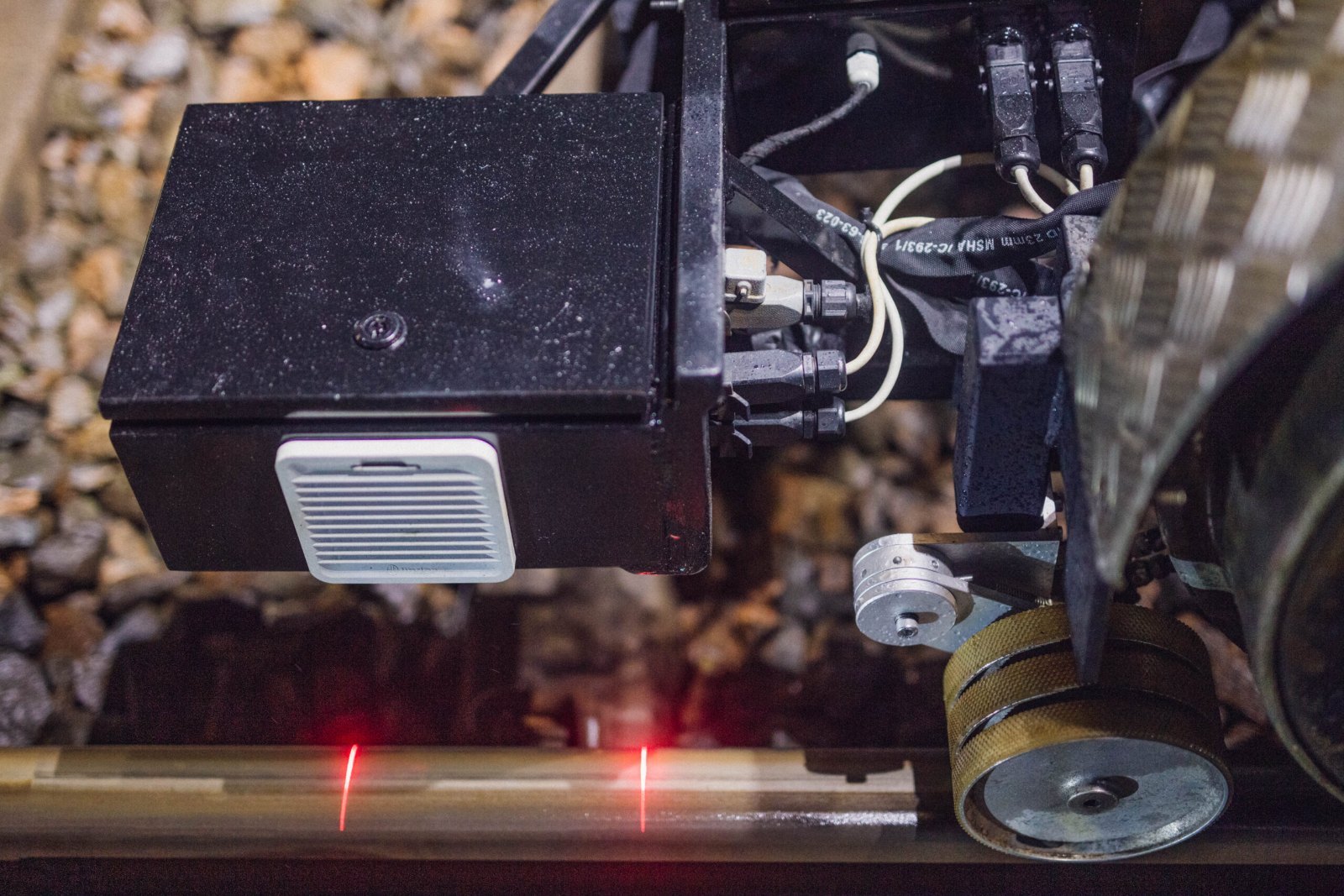
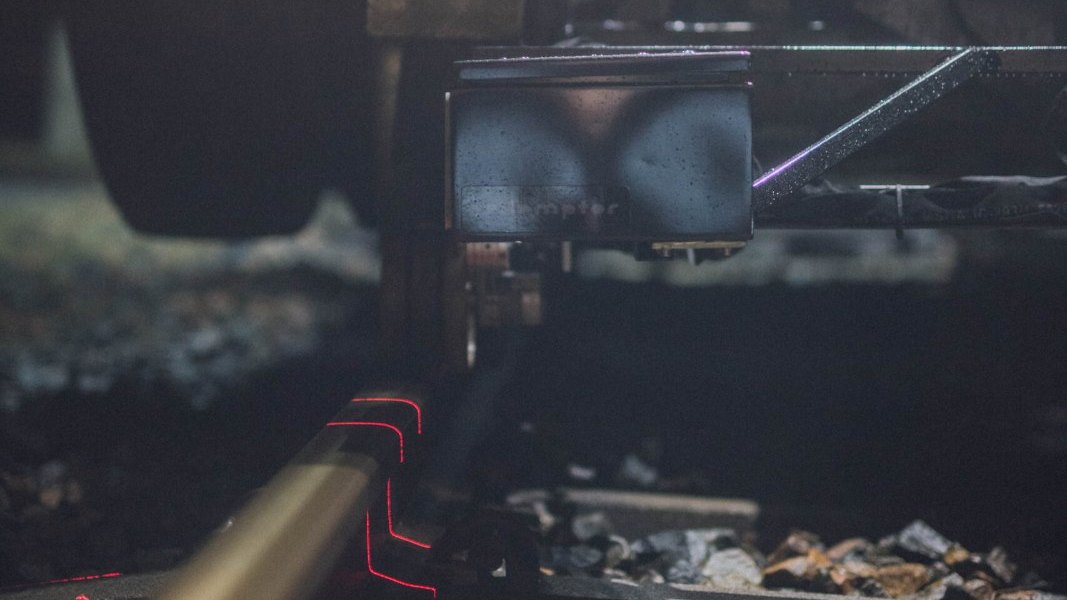
TMS 19 measures track position under load from a track-going machine (TSA) moving at around 10 km/h. Scanners mounted on the vehicle read the rails continuously, and the system turns those readings into the geometry a track engineer needs, every half metre:
- cant and cant unevenness, compared with the designed cant in Trafikverket's track register (BIS)
- twist over 3 m and 6 m
- gauge
- lateral and vertical position of each rail
The operator starts a run by entering a position in km + m, or lets the system find its own position, then picks a speed class and who should receive the report. The system connects to Trafikverket's Lastkajen e-service and fetches current track information, so measured geometry is compared with the designed track position and nearby objects such as switches, culverts and level crossings are labelled in the results. Manual contact with BIS is kept to a minimum.
Before every run the system tests and calibrates itself. If it detects changed values, it asks the operator to place a calibration template under the scanners. The optimal measuring speed is 10 km/h, give or take 3. During a run the operator can mark locations, add notes, and pause and resume. The system watches the whole run, not only the track: how the vehicle is driven affects the result, so TMS 19 checks the measurement itself and keeps the operator, or anything else, from introducing errors. A run can follow a planned measurement scheme or be done on the spot; the method and the results are the same.
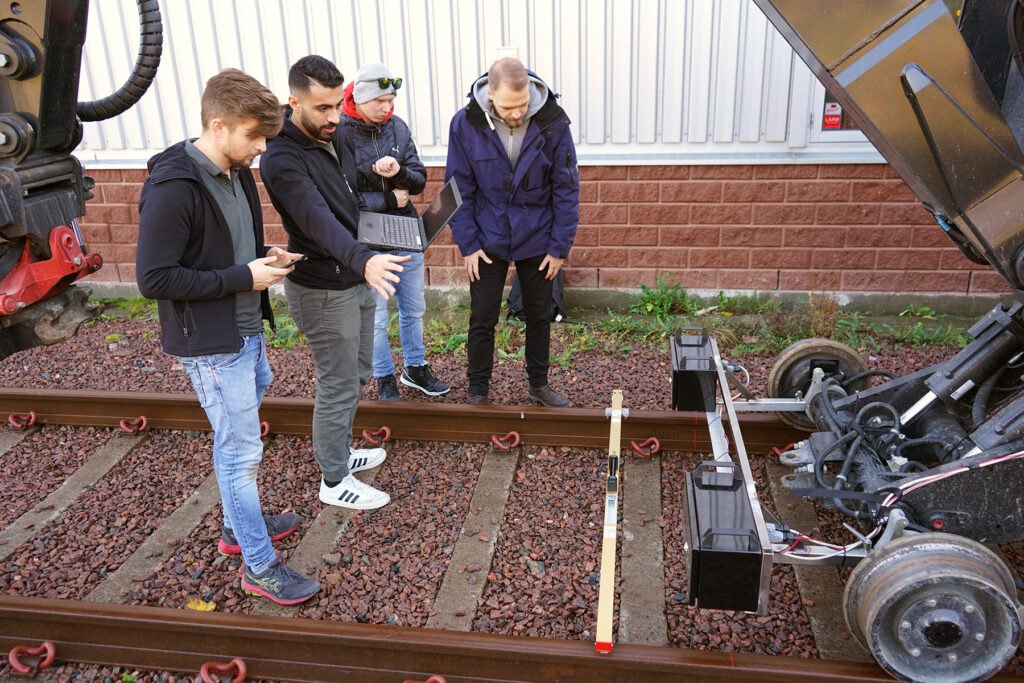
Built to move between machines
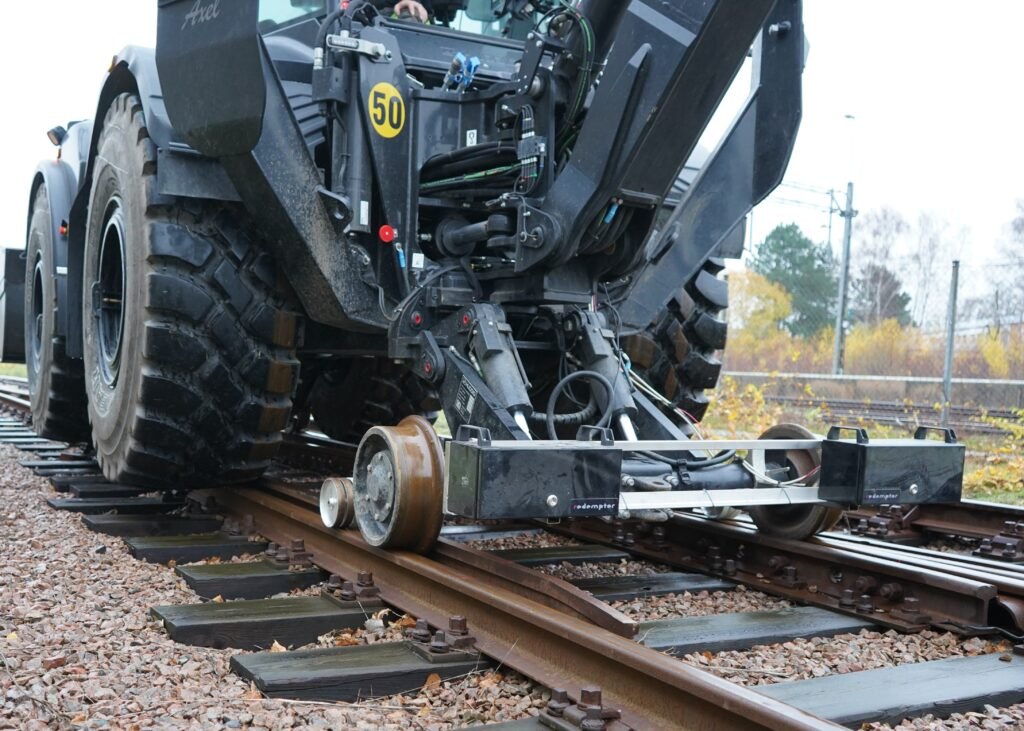
Contractors move between vehicles from job to job, so the system moves with them. TMS 19 is a mobile unit that can be fitted to any heavy rail-going work vehicle, two-way machine or rail vehicle with an axle load of at least 5 tonnes: rubber-tyred TSA carriers driving directly on the rail, TSAs with track-follower wheels, towed TSAs, FRB, LRB and MRB units, and self-propelled or towed rail vehicles. It can be mounted temporarily or fixed. First installation on a new machine takes about three working days, including run-in and calibration, and it works anywhere with a 4G connection.
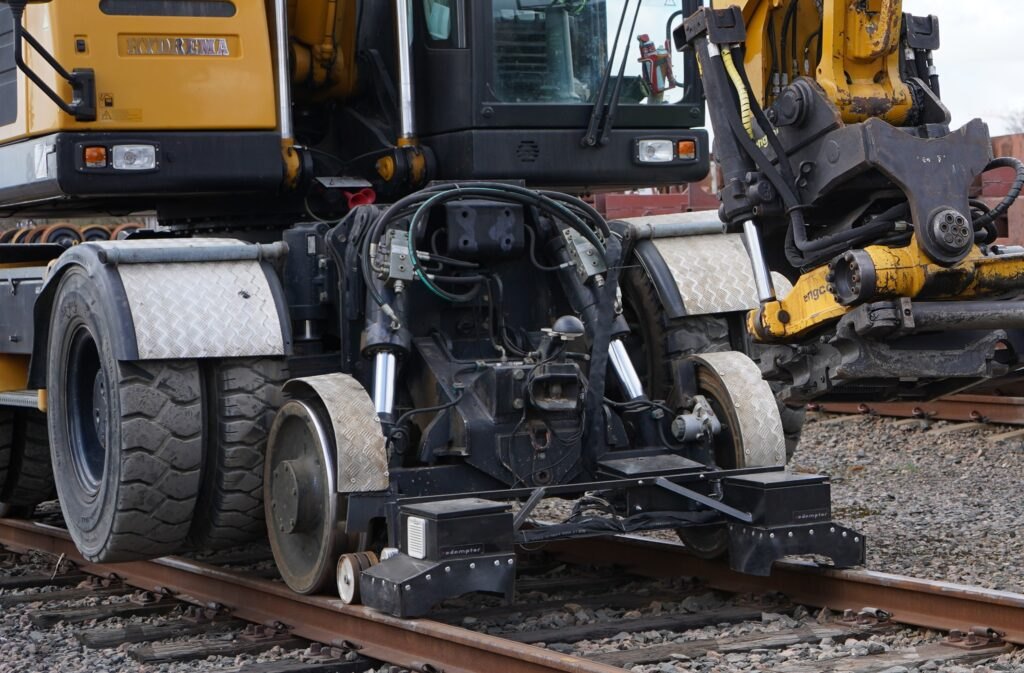
Operators learn it in a four-hour model course, or a full day for direct-drive rubber-tyred carriers, where the result depends most on the operator.
The report
The report comes as a graph and an Excel protocol, with deviations sorted into Trafikverket's fault classes: Plan, UH1, UH2, KRIT and STOPP. A separate sheet lists only the UH2, KRIT and STOPP faults, so the person signing off the track sees what matters first. It goes to the recipients the operator chose at the start, such as the project manager, the commissioning inspector or the site supervisor.
Meeting the standards
A measuring system that decides whether a line can reopen has to be trusted. TMS 19 is designed to meet TRVINFRA-00013 Spårläge (version 2) and SS-EN 13848-3 for track-geometry measuring systems. For use on and around the railway it complies with the EMC directive 2014/30/EU and EN 50121-3-2, with radiated and conducted emission and RF immunity tested to the referenced CISPR and EN 61000-4-3 standards. Each installation is validated by an accredited body once a year, and again after any damage, collision or removal of fixed components.
Outcome
TMS 19 replaces a manual, error-prone check with an automatic, loaded measurement that any trained operator can run from the work vehicle, and gives the people signing off the track a standards-based report. We keep developing the system; Specialsystem sells it and backs it with 24/7 support and fast spare-parts delivery.